

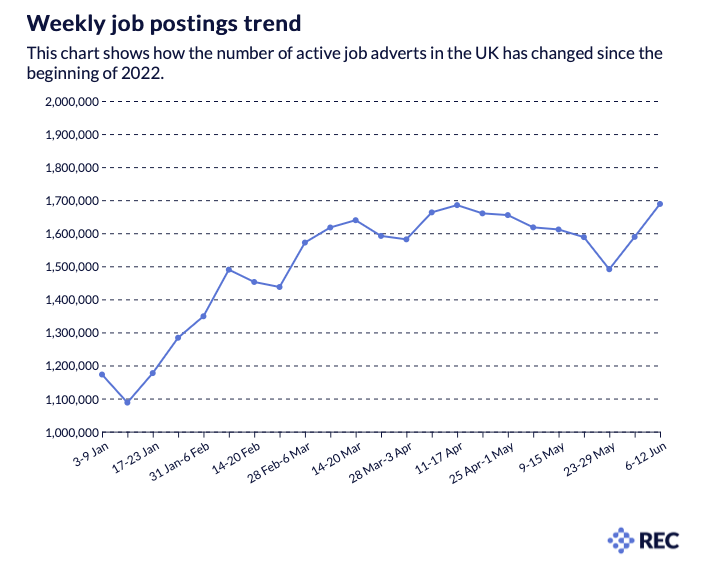
Last week, the ONS published its July 2022 UK labour market update. The figures showed a strong but challenging employment market.
For candidates, it was a good time to be looking for work. Vacancies remained close to record levels and businesses were competing for available workers. However, the employment rate was still below its pre-pandemic level and economic inactivity remained high.
For employers, that created a very different challenge.
Businesses across the UK were struggling with labour and skills shortages that had the potential to constrain economic growth over the longer term. We didn’t have to look far to see the consequences, from disruption at airports and driver shortages to growing pressures across the NHS.
This is one of the reasons I’m working so closely with our clients to help them overcome recruitment challenges and build the teams they need to grow.
But recruitment alone can’t solve the problem. Both businesses and government need to put workforce planning, and for me particularly sales force planning, much higher on the agenda.
Businesses need to think differently about how they hire, develop and retain their people. That could include creating internship schemes, investing in training and giving people greater opportunities to develop the skills employers need.
UK Unemployment in 2022
The UK unemployment rate remained historically low during the first half of 2022.
According to the ONS:
- Unemployment was 3.8% in March–May 2022, down 0.1 percentage points from the previous quarter.
- Employment increased to 75.9%, although it remained below its pre-pandemic level.
- Economic inactivity fell to 21.1%, but remained an important challenge for the labour market.
At the time, forecasts suggested unemployment could begin rising again as economic conditions changed.
The Spring Statement 2022 described a strong labour market emerging from the pandemic, while also recognising considerable uncertainty around the wider economic outlook.
Looking back at these figures also shows why headline unemployment doesn’t tell us everything about recruitment. Businesses can still struggle to find the people they need even when unemployment is low.
We’re seeing a similar challenge in today’s market, where top sales talent isn’t necessarily waiting for employers to make a decision.
Inflation Adds Further Pressure to the Labour Market
Inflation was another major concern for businesses and workers in 2022.
The Consumer Prices Index (CPI) rose by 9.1% in the 12 months to May 2022, up from 9.0% in April.
At the time, the Bank of England’s May 2022 Monetary Policy Report projected that inflation would rise further during the year, driven largely by energy and goods prices.
For employers, rising living costs added another consideration to recruitment and retention. Salary remained important, but businesses also needed to think more broadly about what made people want to join and stay with an organisation.
UK Job Vacancies Remained Near Record Levels
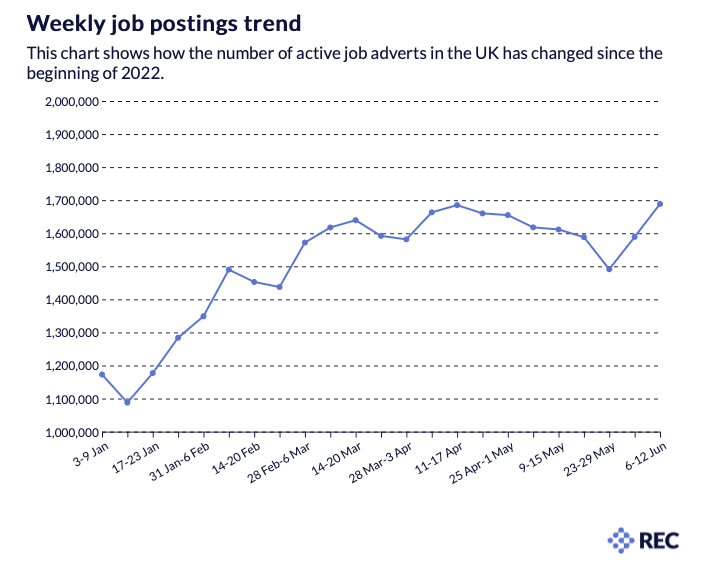
Demand for workers remained exceptionally high.
According to the ONS:
- There were 1,294,000 vacancies between April and June 2022, an increase of 6,900 from the previous quarter.
- Vacancies remained 498,400 above their January–March 2020 pre-pandemic level.
- Accommodation and food service activities recorded the largest quarterly increase in vacancies, rising by 10,200.
- Wholesale and retail trade and the repair of motor vehicles and motorcycles recorded one of the largest falls, declining by 7,200.
Although vacancies continued to increase, the rate of growth was slowing.
For employers, the challenge wasn’t simply creating jobs. It was finding people with the right skills, experience and mindset to fill them.
That’s particularly important when scaling a sales team without losing quality. Hiring quickly can solve an immediate headcount problem, but hiring the wrong people can create much bigger challenges later.
Why Are UK Labour Shortages a Long-Term Challenge?
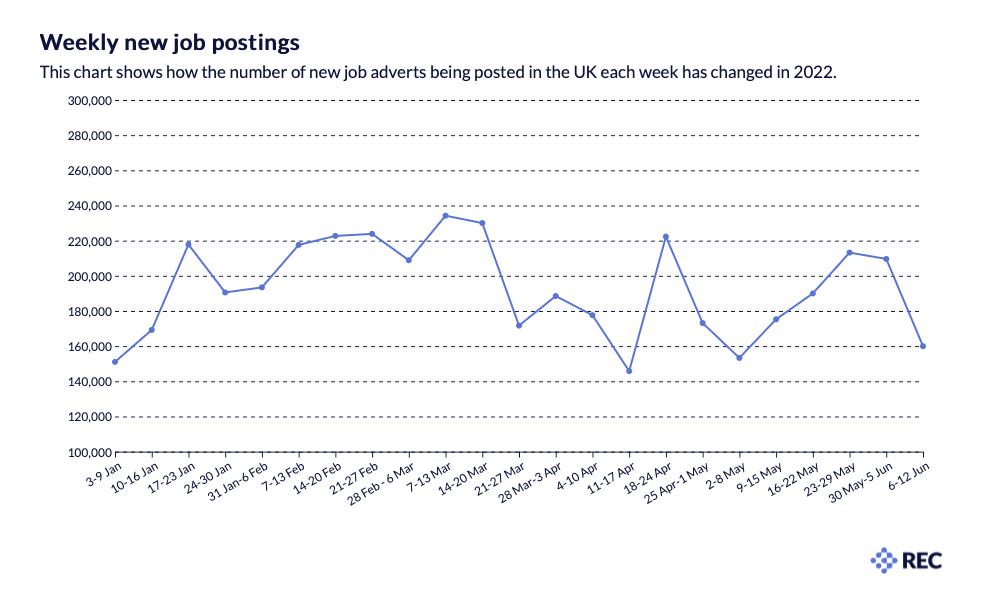
The pandemic shone a brighter light on an issue that had been developing for years.
As more experienced workers leave the labour market and businesses require new and evolving skills, weaknesses in the UK’s skills pipeline become increasingly apparent.
The challenge isn’t simply that there aren’t enough people. There’s also a question of whether employers are making the best use of the skills already available.
Our research into the UK’s overqualified workforce explores this problem from another angle, looking at what happens when people’s skills and qualifications aren’t being fully utilised in their roles.
Addressing labour shortages therefore requires more than recruitment alone. Skills development, immigration, infrastructure and long-term workforce planning all have a role to play.
The REC estimated that if demand for workers increased by 10% while labour supply remained constrained, the resulting shortages could reduce expected UK GDP and productivity by 1.2% by 2027, costing the economy between £30 billion and £39 billion every year.
That makes getting our people strategy right an economic issue as much as a recruitment one.
How Can Businesses Improve Workforce Planning?
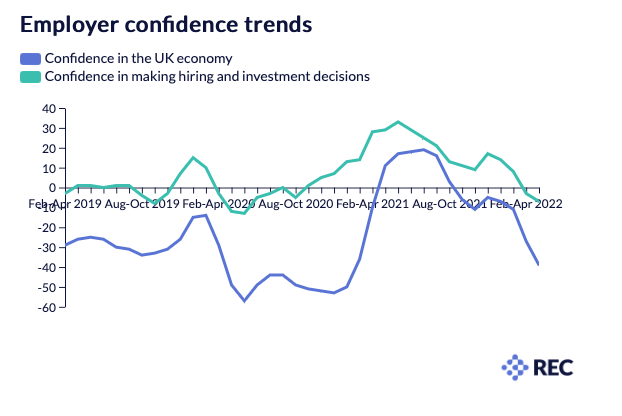
Neither government nor businesses can solve labour shortages alone. But employers can take greater control of how they prepare for their future workforce needs.
The REC’s recommendations included:
- Create a five-year workforce strategy and investment plan.
- Improve training and development opportunities for staff.
- Implement effective equality, diversity and inclusion policies.
- Improve employee engagement, listen to staff and use different approaches to retain talent.
I’d add another consideration for sales employers: look beyond the CV.
Experience and technical skills matter, but the behaviours and motivations someone brings to a team can be just as important. Taking a mindset-first approach to sales hiring and retention can help businesses think beyond filling an immediate vacancy and focus on finding people with the potential to contribute over the longer term.
Ultimately, businesses need to stop treating recruitment as something that begins when a vacancy appears.
Long-term workforce planning means understanding where your business is going, which skills you’ll need to get there and how you’re going to attract, develop and retain the people who can help make it happen.
As we close out July and schools break up, I wish you a wonderful summer.
Although it’s important to think long and hard about workforce planning, we also need to make time for family and friends. There’s something so special about the long days and lighter evenings.
If growing your sales team is part of your longer-term plans, discover how Citrus Connect builds sales teams around the people, skills and experience a business needs to grow.
See you in September for another recruitment update.