

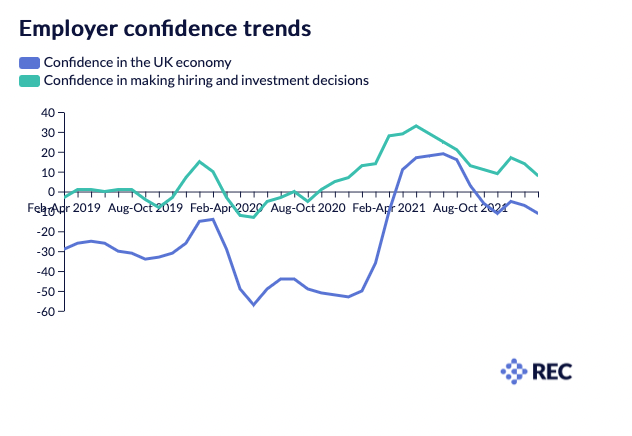

According to the KPMG and REC UK Report on Jobs, recruitment activity across the UK remained strong in April 2022. However, ongoing candidate shortages continued to weigh on business growth, and as recruiters, even we were struggling to fill a number of roles.
Although the decline in candidate supply eased slightly from the previous month, availability remained low. The businesses able to hire successfully were often those taking a more proactive approach to recruitment and planning ahead for the people they needed.
April 2022 Recruitment Insights
The latest recruitment data showed that demand for workers remained strong:
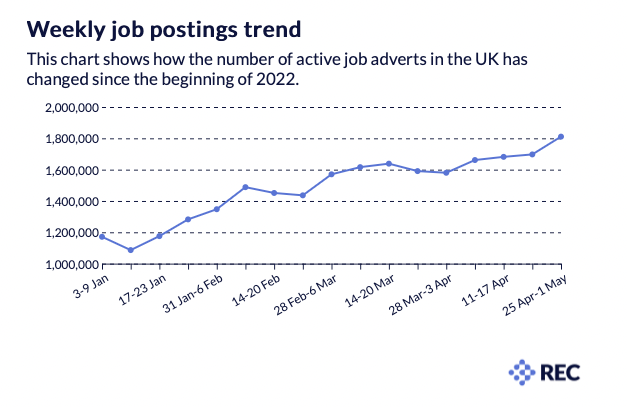
- In the last week of April, there were 1.81 million active job adverts in the UK, up 7% from the previous week and 15% from a month earlier.
- Around 173,000 new job adverts were posted during the same week.
- Almost every occupational area recorded at least a marginal increase in active job adverts.
- Sales and retail assistants recorded a 6.1% increase in active job adverts.
- Starting salary inflation remained close to a record high.
- Labour shortages contributed to a slower rise in staff placements.
- Overall demand for staff remained robust.
The vacancy figures come from the REC Labour Market Tracker, while salary and candidate availability trends were reported in the KPMG and REC UK Report on Jobs.
Why Was Candidate Availability Falling?
We experienced a tight labour market as candidates became more hesitant to seek new roles amid the lingering effects of the pandemic and wider geopolitical and economic uncertainty.
The number of job placements continued to grow, but at a more stable rate. In April, permanent placements and temporary billings increased at their slowest rates for at least a year as recruiters struggled to fill vacancies.
Given how strong the recruitment market had been, this wasn’t entirely surprising. But it did mean employers needed to get their offer right and position their roles effectively if they wanted to attract the right people.
That included looking closely at everything from the role and progression opportunities to salary and earning potential.
The number of new job adverts also began to stabilise. Around 173,000 new postings appeared in the final week of April, which remained a healthy level of activity by historical standards. However, the rising number of active adverts suggested vacancies were staying open for longer as employers struggled to attract candidates.
For candidates, that made it a good time to consider new opportunities. For employers, it reinforced the need to look closely at every aspect of their offer and seek recruitment expertise where needed to secure the quality of sales talent their business required.
Why Is a Recruitment Plan Important?

Every business is feeling the squeeze, with employers working harder than ever to hire skilled people. Labour and skills shortages aren’t challenges that can be solved overnight, which makes long-term workforce planning even more important.
For me, workforce planning means having the right people, in the right roles, at the right time to support the growth of your business.
That’s easier said than done. A robust recruitment plan means thinking ahead about:
- The roles and headcount your business will need as it grows.
- The skills and experience you need from new hires.
- How you’ll attract the right candidates in a competitive market.
- What you can offer candidates beyond the role itself.
- How recruitment supports your wider business objectives.
Recruitment shouldn’t begin only when a vacancy becomes urgent. If you’re building a dedicated sales team, you need to think ahead about the people, skills and capacity your business will require as it grows.
The pandemic shone a light on some of the realities of the labour market, including skills shortages and increased levels of economic inactivity. Breaking that cycle requires businesses, government, educators and industry experts to work together.
Our education system also has an important role to play in preparing the future workforce, alongside programmes that give people opportunities to upskill and reskill throughout their careers.
Ultimately, our people are one of our most valuable assets. It’s time for businesses to become proactive about recruitment and workforce planning rather than waiting until a hiring challenge forces them to react.

Planning for the Future of Your Sales Team
It may be gloomy and overcast in Yorkshire today, but my hopes are high that together we can achieve your business goals.
If you’re planning for your next stage of growth, discover how Citrus Connect builds and scales sales teams and how we can help you find the right people to support your business.
As we head into the weekend and hopefully towards summer, I wish you and your family a bright and sunny weekend.
May is a busy month for my family and me as we celebrate the birthdays of my father and brother. It’s a month when I pay absolute homage to the hero my father is and how he has inspired my entrepreneurial journey.
He’s one of the reasons Citrus Connect Recruitment and I can support our clients today in achieving their headcount and business growth goals.
Best wishes,