


Hiring challenges remained a major concern for UK businesses towards the end of 2022. Economic confidence was falling, but employers still needed people, leaving little room for getting recruitment wrong.
For businesses looking to grow or replace members of their team, recruitment needed to be more considered. The role, recruitment process and overall opportunity all had to give the right people a reason to choose one employer over another.
Employer Confidence Fell, but Businesses Still Needed to Hire
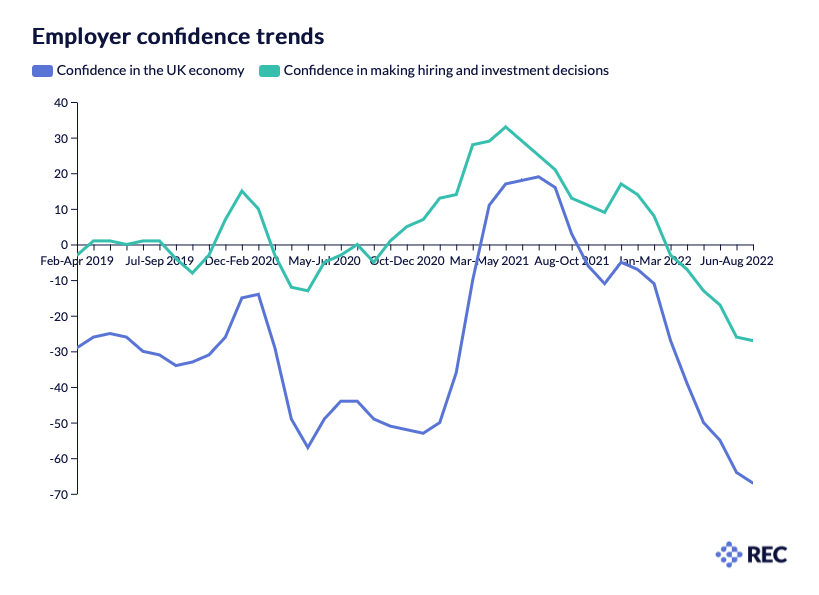
During the third quarter of 2022, employer confidence in both the UK economic outlook and businesses’ ability to make hiring and investment decisions declined significantly.
According to the Recruitment & Employment Confederation (REC), confidence in the wider economy fell to a net balance of -67 between July and September. Confidence in making hiring and investment decisions also dropped to -27.
Despite that uncertainty, employers still planned to recruit. Hiring intentions for permanent staff remained positive at +17 for the following three months and +18 over the following year.
The figures highlighted an important challenge: businesses were becoming less confident about the economy while still needing people to support their operations and growth.
Demand for Workers Remained High
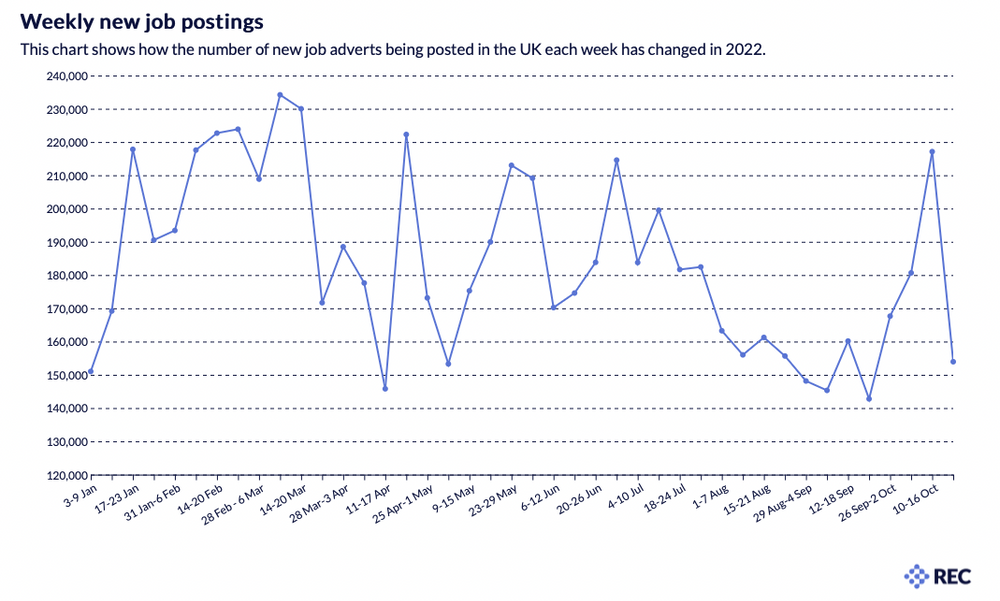
The REC and Lightcast Labour Market Tracker recorded 1.4 million active UK job adverts during the week of 17–23 October 2022.
There were:
- 154,000 new job postings during the week of 17–23 October
- More than 217,000 new postings the previous week
- Between 1.4 and 1.5 million active adverts consistently since mid-August
- Increased demand across areas including education and childcare
- Three of the UK’s ten biggest hiring hotspots in the North West
- Seven of the ten lowest hiring hotspots in Northern Ireland
Although the number of new adverts fluctuated from week to week, overall demand remained high.
For employers, this meant a vacancy wasn’t competing only with similar businesses. Candidates potentially had a large number of opportunities to consider, making it increasingly important to attract the right sales candidates rather than relying on another job advert to cut through.
Getting Recruitment Right in an Uncertain Market
Economic uncertainty can make businesses more cautious about investment, but delaying necessary recruitment can create challenges of its own.
Whether recruiting to grow or replace someone who’s left, employers need to understand who they’re looking for, what the role offers and how they’re going to reach the right people.
That becomes particularly important when scaling a sales team without losing quality. Increasing headcount quickly is only valuable when the people being brought into the business are right for the roles they’re expected to perform.
The Recruitment Process Matters to Candidates
In a competitive market, every stage of recruitment contributes to a candidate’s impression of the employer.
The number of interview stages, how quickly decisions are made and the information provided before an interview can all influence the experience.
A comprehensive job description should also give candidates enough information to understand the opportunity. That includes the responsibilities and expectations of the role, but also earning potential, progression and what working for the business is actually like.
Employers should also consider whether every stage of their process is necessary. Deciding between in-person and virtual interviews based on the role and stage of recruitment can help create a process that works for both the business and the candidate.
75% OF CANDIDATES RESEARCH AN EMPLOYER BEFORE APPLYING FOR A JOB
83% OF EMPLOYERS WITH A STRONG BRAND SAY IT SUPPORTS THE ABILITY TO HIRE
69% OF CANDIDATES WOULD NOT WORK IN A COMPANY WITH A POOR BRAND
Employer Brand Starts Before the Interview
Candidates don’t experience your employer brand for the first time when they join the company. Their impression begins much earlier.
The job advert, company website, communication from the recruiter and interview process all tell candidates something about what working for the business might be like.
Culture is part of that picture too. Understanding how workplace culture can influence performance can help employers think more carefully about what they’re communicating to prospective employees and whether that reflects the reality of the business.
Hiring managers are no longer the “buyers” in the recruitment process but the “sellers.” You must change your mindsets and get up to speed in your new revised role as an interviewer.

Employers Need to Sell the Opportunity
The balance of recruitment changes when strong candidates have several opportunities available to them.
An interview still needs to establish whether the candidate is suitable for the role, but the candidate is also deciding whether the role and business are right for them.
That means hiring managers need to be prepared to explain why the opportunity is worth considering.
For a sales role, earning potential will naturally be part of that conversation. But candidates may also want to understand progression, culture, flexibility, expectations and what success looks like within the business.
It doesn’t mean overselling a vacancy. An ethical recruitment process depends on setting clear expectations and giving people an accurate understanding of the opportunity they’re considering.
Recruitment Doesn’t End With a Successful Hire
Finding the right person is only the beginning. Businesses also need to create an environment where good people want to stay.
That makes recruitment and retention closely connected. If the experience presented during recruitment doesn’t match the reality of the role, employers risk losing people they’ve invested time and money in attracting.
Building a dedicated sales team therefore requires more than filling individual vacancies. Employers need to consider how recruitment, onboarding, culture, development and retention work together.
Building a Stronger Sales Team
The recruitment market may change, but the fundamentals of good hiring remain important. Businesses need to understand the people they’re trying to reach, position opportunities clearly and run a recruitment process that gives strong candidates confidence in the employer.
When competition for talent is high, getting those decisions right becomes even more important.
If you’re planning to build a sales team, Citrus Connect can help you identify and reach sales professionals suited to your business and opportunity.
Ready to discuss your recruitment plans? Book a call with the Citrus Connect team.
To your success,

Founder of Citrus Connect Recruitment – Let’s connect on LinkedIn
Frequently Asked Questions
Start by clearly defining the role, earning potential, expectations and opportunities for progression. Employers should also consider how their culture, reputation and recruitment experience appear to candidates, particularly when strong salespeople have several opportunities to choose from.
Keep the process clear and efficient. Provide candidates with enough information before the interview, avoid unnecessary interview stages and communicate decisions promptly. Each stage should help both the employer and candidate determine whether the opportunity is the right fit.
Your employer brand shapes how candidates perceive your business before they accept a role. Your job adverts, website, communication, interview process and workplace culture can all influence whether someone wants to work for you. A strong employer brand should accurately reflect the experience people can expect after joining.